


For many aspiring physicians, getting into a medical school in Canada is the ultimate goal—and arguably one of the toughest academic challenges in North America. Unlike the US, where there are roughly 150+ MD-granting schools, Canada has a small and tightly regulated set of medical schools: 17 fully accredited programs, plus the Toronto Metropolitan University School of Medicine in Brampton, which now holds preliminary accreditation ahead of its planned first class in 2029. A second new program, Simon Fraser University’s medical school in Surrey, BC, is on track to welcome its first students in September 2026—the first new medical school in Western Canada in over 55 years. This scarcity creates intense competition, with acceptance rates often hovering below 10% (and significantly lower for out-of-province applicants).
This guide cuts through the noise to highlight the best medical schools in Canada , focusing on their reputation, research output, and the practicalities of tuition and residency requirements.
Why Residency Is the Biggest Factor in Canada
Before looking at rankings, you must understand the “province preference.” Most medical universities in Canada are publicly funded and have a mandate to train doctors for their specific region.
- In-Province Bias: Schools like the University of Saskatchewan, Memorial University, and most Quebec schools reserve the vast majority (sometimes 90%+) of their seats for residents of their own province.
- Out-of-Province Friendly: Schools like the University of Toronto and McGill University have historically been more open to applicants from outside their home province, though the competition remains fierce and, as outlined below, this is shifting for Ontario schools.
Key Considerations for Applicants
French vs. English Medical Schools
Canada is bilingual, and so are its medical schools.
- English: Most schools (U of T, UBC, Western, etc.) teach in English.
- French: Schools like Université de Montréal , Université Laval , and Université de Sherbrooke teach entirely in French. You must be fluent to apply.
- Bilingual: University of Ottawa offers two distinct streams (French and English).
The “International Student” Reality — Now Even More Restrictive
Unlike the Caribbean or the US, medical schools in Canada have never been a realistic pathway for most international students, and as of Fall 2026 the door has narrowed further in the country’s largest province.
- Ontario’s new rule: Starting Fall 2026, Ontario has effectively barred international students from its medical schools. Legislation now reserves at least 95% of seats at Ontario medical schools—including the University of Toronto and McMaster University—for Ontario residents, with the remaining 5% going to other Canadian applicants. In practice, this leaves essentially no seats for international students at Ontario schools, though schools could still admit an international applicant in the rare case a seat goes unfilled.
- McGill remains the main exception: McGill University, governed by Quebec rather than Ontario, continues to accept a small number of international applicants each year.
- Seats are scarce everywhere: Even before this change, the number of seats available for international students at any Canadian school was usually in the single digits (e.g., 5–10 seats total per year across a class of hundreds). Prospective international applicants should confirm current eligibility directly with each school, since policies are evolving quickly.
Top Medical Schools in Canada (2026 Overview)
The following list features institutions that consistently appear at the top of rankings like Maclean’s and QS World University Rankings. Note: Tuition fees are estimates for the 2026/2027 academic year and do not include living costs or books.
| University Name | Location | Type | Approx. Annual Tuition (CAD) |
| University of Toronto (U of T) | Toronto, Ontario | Public | ~ $23,500 (Domestic) |
| McGill University | Montreal, Quebec | Public | ~ $6,500 (QC Resident) / ~ $74,700 (Non-QC) |
| University of British Columbia (UBC) | Vancouver, BC | Public | ~ $20,800 (Domestic) |
| McMaster University | Hamilton, Ontario | Public | ~ $25,500 (Domestic) |
| University of Alberta | Edmonton, Alberta | Public | ~ $36,000 (Domestic) |
| Western University | London, Ontario | Public | ~ $18,300 (Domestic) |
| Université de Montréal | Montreal, Quebec | Public | ~ $6,000 (QC Resident) / $30,000 (Intl) |
Profiles of Top Medical Universities in Canada
Here is a closer look at the best medical schools in Canada and what makes them unique.
1. University of Toronto (Temerty Faculty of Medicine)
Website:
https://applymd.utoronto.ca/
Approx. Annual Tuition:
~ $23,500 (Domestic)
Scholarship options:
Yes
MCAT Required:
Yes (Cut-offs applied)
Why it’s a Top Choice: Consistently ranked as the best medical school in Canada, U of T is a global research powerhouse. It is located in the heart of downtown Toronto and is affiliated with a massive network of world-class hospitals (University Health Network, SickKids, Mount Sinai). The curriculum is known for its “Foundations” approach, which integrates clinical skills early on.
- Key Feature: As an Ontario school, U of T is subject to the province’s new international student policy taking effect Fall 2026 (see above). Prospective international applicants should not assume international admission is available and should verify current eligibility directly with the university before applying.
2. McGill University (Faculty of Medicine and Health Sciences)
Website:
https://www.mcgill.ca/medadmissions/
Approx. Annual Tuition:
~ $6,500 (QC Resident) / ~ $74,700 (Non-QC)
Scholarship options:
Yes
MCAT Required:
Only for applicants with degrees from non-Canadian universities.
Why it’s a Top Choice: McGill is perhaps the most internationally recognized Canadian university brand. Teaching is in English, but students must be proficient in French to manage clinical rotations in Montreal. McGill’s diverse teaching network ranges from modern downtown hospitals to remote indigenous communities in Northern Quebec.
- Key Feature: The tuition is incredibly low for Quebec residents due to high provincial subsidies. Because McGill falls under Quebec’s jurisdiction rather than Ontario’s, it is unaffected by Ontario’s new international student restrictions and remains one of the few realistic options in Canada for international applicants.
3. University of British Columbia (UBC)
Website:
https://mdprogram.med.ubc.ca/
Approx. Annual Tuition:
~ $20,800 (Domestic)
Scholarship options:
Yes
MCAT Required:
Yes
Why it’s a Top Choice: UBC runs one of the largest medical programs in North America, unique for its “distributed” model. Students can be placed at one of four sites: Vancouver (main campus), Kelowna (Southern Medical Program), Victoria (Island Medical Program), or Prince George (Northern Medical Program). This allows for specialized training in rural or urban medicine depending on your placement.
4. McMaster University (Michael G. DeGroote School of Medicine)
Website:
https://ugme.healthsci.mcmaster.ca/
Approx. Annual Tuition:
~ $25,500 (Domestic)
Scholarship options:
Yes
MCAT Required:
Yes (CARS section is critical)
Why it’s a Top Choice: McMaster is famous for pioneering Problem-Based Learning (PBL), a method now used globally. Instead of traditional lectures, students work in small groups to solve clinical cases.
- Key Feature: It offers a condensed 3-year MD program (running through summers), allowing you to enter residency a year earlier than graduates from other schools. As an Ontario school, McMaster is also subject to the province’s new international student policy taking effect Fall 2026 — international applicants should verify current eligibility directly with the university rather than assuming it remains an option.
5. University of Alberta

Website:
https://www.ualberta.ca/en/medicine/index.html
Approx. Annual Tuition:
~ $36,000 (Domestic)
Scholarship options:
Yes
MCAT Required:
Yes
Why it’s a Top Choice: Located in Edmonton, U of A is a research-intensive school known for excellence in areas like virology and diabetes research. It has a very competitive admission process that heavily favors Alberta residents, but it offers world-class facilities and a slightly lower tuition rate compared to Ontario schools.
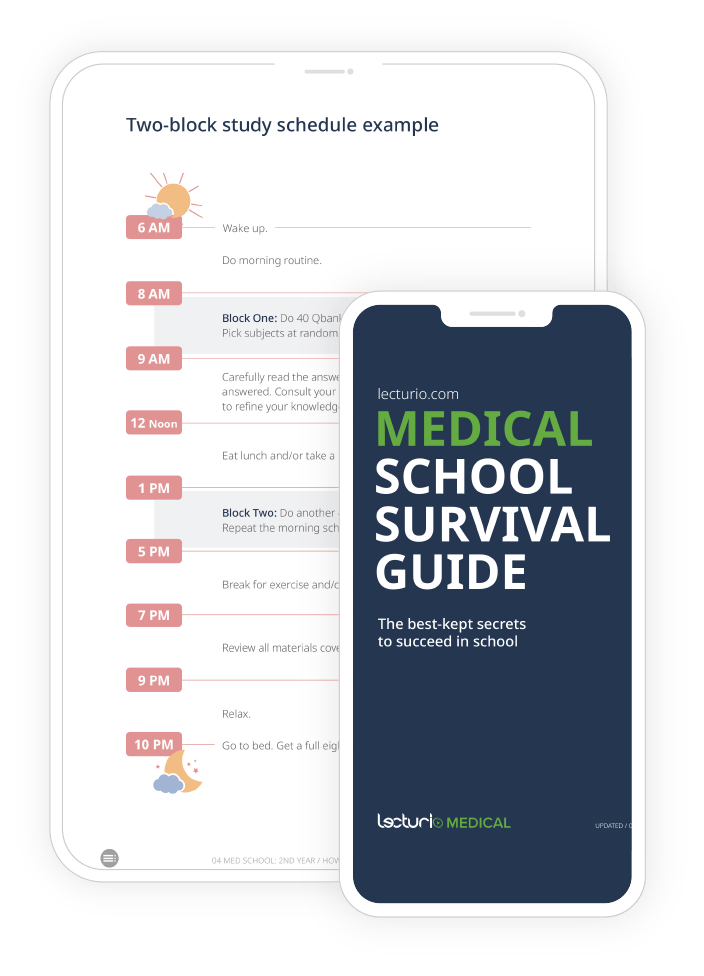
The competition for Canadian medical schools is fierce, and a high GPA alone isn’t enough. You need to crush the MCAT (especially the CARS section) and demonstrate a mastery of medical concepts early on. Lecturio offers comprehensive video lectures and high-yield question banks that parallel the rigorous curriculum of top Canadian, US, and Caribbean schools. Whether you are studying for the MCAT or preparing for your first year of Anatomy, give yourself the advantage you need by exploring Lecturio’s Medical Education resources .
Frequently Asked Questions (FAQs)
Q: What is the MCAT score needed for Canadian medical schools?
A: It varies by school and by admissions cycle. McMaster places heavy weight on the CARS (Critical Analysis and Reasoning Skills) section, while U of T applies cut-offs across each section. Some schools, like the Northern Ontario School of Medicine (NOSM) and French-language schools in Quebec, do not require the MCAT at all. Because cutoffs are adjusted from cycle to cycle, confirm the current thresholds directly with each school rather than relying on prior years’ figures.
Q: Can I apply to Canadian medical schools as an American?
A: It’s technically possible at a small number of schools, but the landscape has narrowed. Starting Fall 2026, Ontario has effectively barred international students from its medical schools, including the University of Toronto and McMaster, reserving at least 95% of seats for Ontario residents and the rest for other Canadian applicants. McGill University, under Quebec’s jurisdiction, remains one of the few Canadian schools that continues to accept a small number of international applicants. Odds remain extremely low regardless of school due to the tiny number of seats available.
Q: Which is the easiest medical school to get into in Canada?
A: There is no “easy” medical school in Canada. However, your best odds are always with the school in your province of residence. If you are willing to live in a rural area, schools like NOSM (Northern Ontario) or the University of Manitoba may have slightly different statistical profiles, but they prioritize local/rural ties heavily.
Q: How much is medical school in Canada?
A: Tuition for Canadian citizens varies significantly by province and school — some, like Quebec’s French-language programs, are heavily subsidized, while others cost considerably more per year. Where eligible, international students typically pay substantially higher rates than domestic students. Because tuition changes annually, and because Ontario’s international eligibility rules are also changing for 2026, the most reliable figures come directly from each school’s official tuition page rather than a fixed number here.
Information about a Canadian online pharmacy can change as regulations, licensing, and prescription requirements evolve, so patients should verify pharmacy credentials with provincial regulatory authorities or Health Canada before ordering. A licensed pharmacy typically requires a valid prescription, reviews medications with a pharmacist or clinician, and explains shipping fees, return policies, and pharmacy safety standards.